
Hormonal Imbalance in Women: Symptoms, What to Test, and What Actually Helps

Medically reviewed by Dr Lakshmi Vaswani, MBBS, DPB (Pathology), MBA
By Yellow Editorial · Last updated 20 November 2026
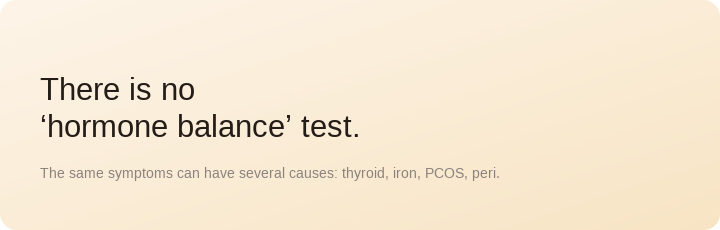
The short answer: "hormonal imbalance" is a phrase we hear all the time, but it isn't a specific medical diagnosis. It's often used to describe symptoms such as fatigue, weight gain, mood swings, irregular periods, acne, hair changes and poor sleep. These symptoms are real, but they can have several different causes.
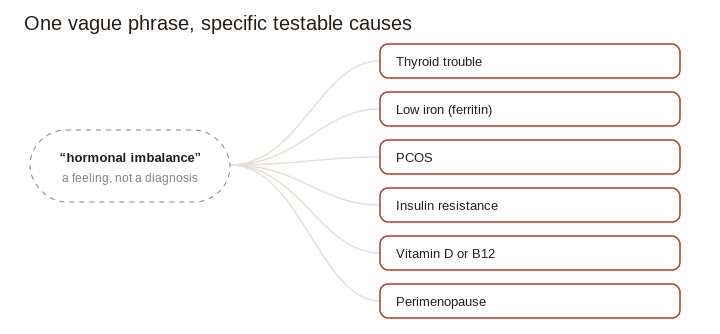
Sometimes hormones are involved, as with thyroid problems, PCOS or perimenopause. Other times, low iron, vitamin deficiencies, stress or poor sleep may be contributing.
There is no single blood test that can tell you whether your hormones are "balanced."
The tests you need depend on your symptoms, age and medical history. And sometimes, particularly during perimenopause, your symptoms and changing periods tell your doctor more than a hormone test would.
Before spending money on a "hormone balance" package or supplements, it's worth finding out what actually needs checking.
What does "hormonal imbalance" actually mean?
Hormones are chemical messengers that help control many functions in your body, including your metabolism, menstrual cycle, sleep and mood.
You have several different hormones, including thyroid hormones, insulin, oestrogen, progesterone and testosterone. Their levels naturally change throughout your life, particularly during puberty, pregnancy and perimenopause.
Sometimes, a hormone level may be too high or too low because of a medical condition, such as an underactive thyroid. At other times, hormone levels may be changing naturally, as they do during perimenopause.
And some symptoms that feel hormonal, such as tiredness, hair loss or difficulty concentrating, may have nothing to do with hormone levels at all.
That's why understanding your symptoms and when they started is often more useful than ordering a long list of hormone tests.
Common symptoms of hormonal imbalance in women
The symptoms are real and worth taking seriously. They commonly include:
- Persistent fatigue and low energy
- Weight gain or difficulty losing weight
- Mood swings, irritability, anxiety or low mood
- Irregular, heavier, lighter or missed periods
- Poor sleep or waking during the night
- Brain fog and trouble concentrating
- Hair thinning or unwanted hair growth
- Acne or other skin changes
- Low sex drive
Notice how general these are. That is the point: the same symptom list fits several different causes, which is exactly why you test rather than guess.
Look at when your symptoms started, how often they occur and whether your periods have changed. These details can help your doctor decide whether any tests are needed.
What causes it?
Several conditions can cause symptoms that women often describe as a hormonal imbalance. Some are related to hormones, while others, such as iron or vitamin deficiencies, can produce similar symptoms.
| Cause | Typical clues | What points to it |
|---|---|---|
| Underactive thyroid | Fatigue, weight gain, feeling cold, constipation | TSH first; further thyroid tests like free T4, anti-TPO if needed |
| Iron deficiency | Tiredness, hair thinning, breathlessness, heavy periods | Full blood count, ferritin |
| Perimenopause | Changing periods, hot flushes, night sweats, poor sleep | Symptoms and menstrual history; usually no blood tests after 45 |
| PCOS | Irregular periods, acne, unwanted facial hair | Clinical assessment, selected hormone tests; ultrasound if needed |
| Prediabetes or diabetes | Often no symptoms; sometimes increased thirst or frequent urination | HbA1c or blood glucose |
| Vitamin B12 or D deficiency | Fatigue, tingling, muscle weakness or bone pain | B12 or vitamin D testing when indicated |
| Chronic stress | Poor sleep, anxiety, difficulty concentrating | Symptoms, sleep patterns and medical history (what a cortisol test shows) |
Several of these can overlap at once, which is why a good work-up looks across the whole set instead of fixating on "the hormones."
What tests are worth doing?
There is no single hormonal imbalance test. What helps is a focused panel matched to your symptoms. For a woman in her forties, a sensible first set usually includes:
- Thyroid: TSH is usually the first test. Free T4 and anti-TPO may be added depending on the results.
- Iron: Ferritin and a full blood count, particularly if you have fatigue or heavy periods.
- Vitamin B12: Worth checking if you have symptoms of deficiency, particularly if you follow a vegetarian or vegan diet.
- Vitamin D: May be recommended if you have symptoms or risk factors for deficiency.
- Blood sugar: HbA1c or fasting glucose to check for diabetes or prediabetes, depending on your risk factors.
- Other hormones: Testosterone and SHBG may help when PCOS is suspected. Prolactin may be checked if your periods have stopped unexpectedly or become very irregular.
If you're over 45 and experiencing typical perimenopause symptoms, FSH and oestrogen tests are usually unnecessary. Hormone levels can fluctuate considerably during this time, so a single blood test may give a misleading picture. Our guide on hormone tests for perimenopause explains why.
What actually helps
Once you understand what may be causing your symptoms, it's easier to find the right treatment.
Depending on the cause, this might include:
- Low iron: Iron-rich foods, iron supplements if needed, and treatment for heavy periods.
- Underactive thyroid: Thyroid medication, when indicated, with regular monitoring.
- Vitamin D or B12 deficiency: Supplements or replacement treatment, depending on the deficiency and its cause.
- Prediabetes or insulin resistance: Regular exercise, including strength training, a balanced diet and weight management where appropriate.
- Perimenopause: Treatment based on your symptoms. This may include hormone replacement therapy (HRT), which you can discuss with your doctor.
Regular exercise, adequate sleep and a balanced diet can also help support your health during midlife.
Be cautious about supplements advertised as "hormone balancing." Most have limited evidence behind their claims, and some may interact with medicines. It's worth checking with your doctor before taking them.
This is the thinking behind Yellow's blood panel. Instead of a vague "balance" package, it runs the focused, symptom-led set, checks the India-specific deficiency layer, and returns a plain read of what is actually driving how you feel. You can see how it works at yellowforhormones.com. Yellow’s blood tests are also offered on their own, as the perimenopause panel.
Frequently Asked Questions
Is "hormonal imbalance" a real diagnosis?
Not as a precise one. It is a popular phrase for real symptoms that can have several causes, such as thyroid problems, low iron, PCOS, insulin resistance or perimenopause. Finding out which one is involved matters, because that is what can be treated.
What test shows a hormonal imbalance?
There is no single test that reports "balanced" or "imbalanced." The tests depend on your symptoms, age and medical history. TSH is usually the first thyroid test, with free T4 and anti-TPO added if needed. Ferritin, vitamin B12, vitamin D and blood sugar are checked when your symptoms or risk factors point to them, and testosterone or prolactin only if a doctor suspects a specific problem.
What are the main symptoms of hormonal imbalance in women?
Commonly fatigue, weight change, mood swings, irregular periods, poor sleep, brain fog, hair and skin changes, and low libido. These are general and overlap across several causes, which is why testing beats guessing.
Can perimenopause cause a hormonal imbalance?
Perimenopause is itself a natural hormone transition, so it causes many of these symptoms. But because the same symptoms also come from thyroid, iron and other issues, the point is to confirm what is driving them rather than assume it is "just hormones," especially as these problems often overlap.
Do hormone-balancing supplements work?
Most supplements sold to "balance hormones" have little good evidence for that claim. They are no substitute for finding the specific, treatable cause of your symptoms. Spend the effort on the right tests and proven treatments first, and discuss any supplement with a doctor.
Which hormonal imbalance tests should an Indian woman prioritise?
It depends on her symptoms. Ferritin and a full blood count are worth asking about if you are tired or your periods are heavy, since 57% of Indian women are anaemic. TSH is usually the first thyroid test. Vitamin B12, vitamin D and HbA1c are checked when symptoms or risk factors point to them.
How much does a hormonal imbalance test cost in India?
It depends on what the package includes. Across 32 women's health and hormone packages sold in India, read on 19 November 2026, prices ran from ₹1,049 for six tests to ₹8,159. A larger package is not always the fuller one: five of the 32 listed ferritin and four listed insulin. Check the test list against your symptoms before you pay. Yellow's perimenopause panel has 22 tests for ₹4,999, with a symptom questionnaire.
Further Reading
- National Institute for Health and Care Excellence (NICE). Menopause: identification and management (NG23), published 2015, last updated 15 April 2026.
- National Health Service (NHS UK). Menopause and perimenopause: symptoms, reviewed 2024.
- Ministry of Health and Family Welfare, Government of India. National Family Health Survey (NFHS-5), 2019-21: anaemia prevalence among women aged 15-49 (57.0%).
- Unnikrishnan AG, Kalra S, Sahay RK, Bantwal G, John M, Tewari N. Prevalence of hypothyroidism in adults: An epidemiological study in eight cities of India. Indian Journal of Endocrinology and Metabolism, 2013;17(4):647-652.
- National Health Service (NHS UK). Polycystic ovary syndrome (PCOS), reviewed 2022.