
After everything that didn't work, you chose Yellow. Here's how we intend to do it differently.
By Chandni Menda, founder of Yellow · Last updated 11 November 2026
Over the last few weeks, I've spoken to many women who saw something about Yellow and wrote to us wanting to know more. On almost every call, women started by telling me what they've already tried.
Most had seen a gynaecologist and a nutritionist, done a round of blood tests and tried a supplement or two. Some had even joined a programme. A lot of them had been at it for years, through their late thirties and into their fifties.
What women told us
The women who were in early forties had been told they were too young for perimenopause.
Some had nutritionists who gave them restrictive windows of eating that impacted their energy at work.
And some told us - while their reports came back normal, they didn't feel normal.
A few of these women came to us curious. They had read about perimenopause, had their reports ready, and wanted someone to explain them. Most others came tired. Each thing they had tried helped with one symptom for some time, and then it all came back.
Those conversations have taught us a lot.
If you are reading this, you have just signed up with Yellow, or you are about to. And that means...
You are trusting us to give you the answers and the access to care that you have not found so far. This note is to tell you why it can be different with us.
1 of 6
We start with your full story and context
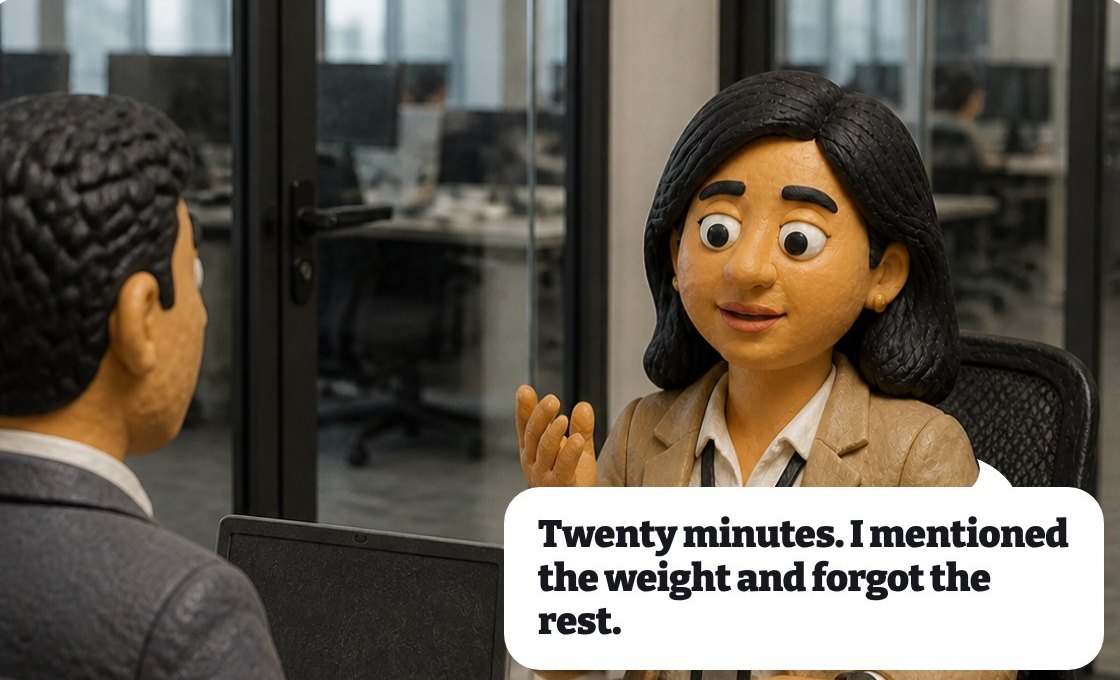
Most women first took their symptoms to a gynaecologist. One of the first things we learned is how little time a consultation gives a doctor. 8 out of 10 gynaecologists we met told us they spend about 20-35 minutes with each woman. And, one of them also mentioned that they struggle to play both roles - of a clinician and of a counsellor. Because symptoms of perimenopause, for instance, are not just about what shows up on a report. But about what life looks like, emotionally and mentally.
In some cases, we also found out that women don't share details without being asked. And that means, better health demands spending the time and headspace to ask questions. And build context.
So before you meet anyone at Yellow, you first tell us about your cycle, symptoms, history of health, food, work, home, and even your mother's menopause.
This goes into your health snapshot that our panel of clinicians and practitioners review.

2 of 6
Every doctor on your case reads all details, not just what is "relevant" to their expertise.
When the first appointment did not give them all answers, many women went on to more doctors. We learned how often symptoms get split up this way. A hot flush can send women to a cardiologist, and low mood to a psychiatrist. And that means, many doctors were writing prescriptions for the part they treat, without reading full context.
At Yellow, we keep one record for each woman. And, your care team only responds after they've read all of it. From gynaecologists, to nutritionists, and everyone in between.

3 of 6
Your plan has to fit the day you already live, with gradual changes (on both sides)
Alongside the doctors, most women we spoke to had tried a nutritionist or a programme. And the thing is, each one had some method that has shown them outcomes. For no fault of theirs, these practitioners take the same method to the next woman they consult.
That's where it perhaps fails. For example, a diet plan that recommends two meals, one at 10 and one at 4, may be very useful for most cases. But, doesn't work for the working mother who's up at 6 AM.
So our intake asks who cooks, when you leave for work and what you already do, and the plan is built on top of it.
The disclaimer here is that - for life to look and feel different, there needs to be a lifestyle change. However, in our case, we want the starting point to not be overwhelming.
4 of 6
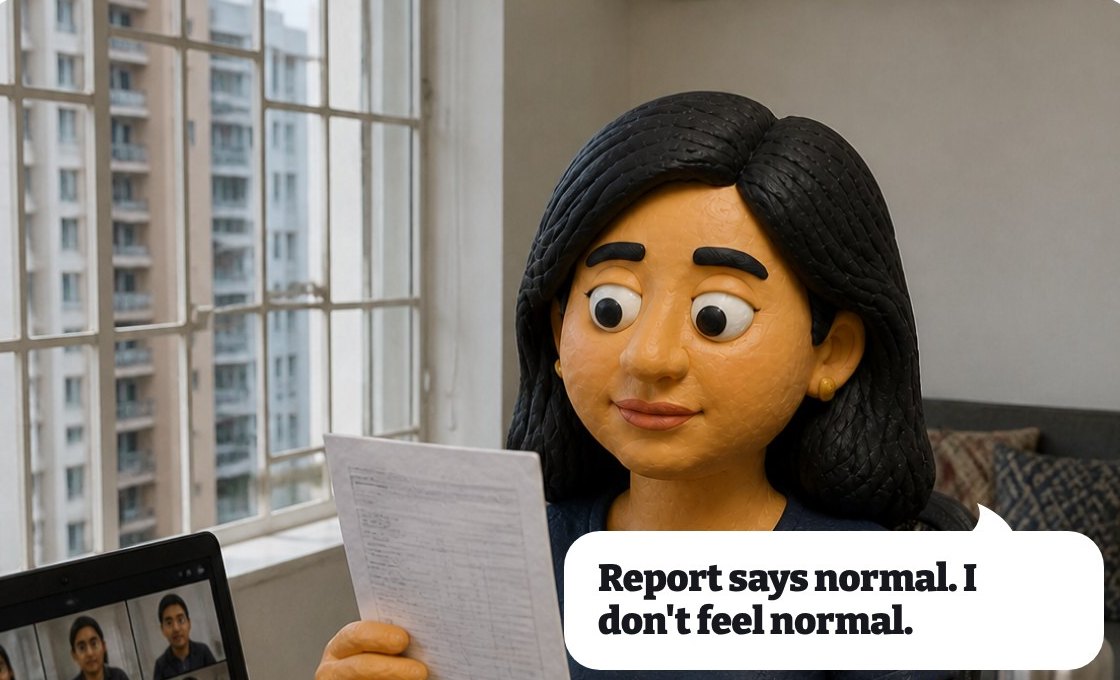
A normal report might be a reason to keep asking questions and not settle
Women told me about reports that came back normal in the same months they could not sleep through the night, and about scans that did not change what the doctor did next.
The test is useful. Especially with perimenopause, where a lot of other reasons can mimic the same symptoms. However, a blood draw doesn't fully understand the hormonal fluctuations.
And that means, apart from a customised, comprehensive panel, we ask questions. We understand the symptom science. And, see both together to draw any kind of conclusion.

5 of 6
Most of the work happens between appointments
Even if a plan was written, the next appointment was often weeks away. Most women I spoke to knew what to do. We learned that what they did not have was someone checking in during the weeks. Some even told us about the yoga and exercise equipment at home, kept unused.
So at Yellow, a care concierge checks in every week. On the easy and tough days. Works with you to find solutions and nudge you.
In fact, this was also our learning in working with founders building in health and pursuing our personal goals. That good health means sticking through the lowest points. When there hasn't been progress for days. And to do that, we often need someone on our side.

6 of 6
You hear every option before you choose one
When it came to treatment, a few women told me the programmes they looked at started with HRT or they were prescribed medicines with little lifestyle intervention.
Some even experienced side effects to the medicines and decided to stop taking them altogether. We learned that women want to understand their options before one is chosen for them.
And that means, we don't just need to follow traditional methods of care, but work with clinicians who are at the frontier of science. Who come with a large dataset of cases they've worked on. And then, get context about the woman before designing the protocol.
All these insights translate into what we do at Yellow
- Gets to know you
- Keeps one record of your health
- Finds out what is driving your symptoms
- Takes care of the next steps
- Constantly learns and gets better
Think of Yellow as a personal health brain for this phase of your life.
It gets to know you through a detailed intake based on symptom science, your blood work and weekly check-ins. It keeps one record of your health, with your labs, your doctors and every conversation in one place. It finds out what is driving your symptoms, and it takes care of the next steps, from a retest at day 90 to a summary for your gynaecologist.
It constantly learns and gets better. We know we cannot make the symptoms magically disappear. But, we can ease you into the transition. So you don't lose these years guessing and looking for answers.
You are one of the first women who've trusted us
I've met and talked to over a 100 clinicians in the last five months. With just one question - if you had infinite resources, what would you do for women in this transition. Turns out, the answer to that is quite simple. It may not be easy, but still simple.
So, thank you for being here to experience that with us.
If you read this and have more notes for us, please write to me at cm@spotyellow.com or +919372373479.

From,
Chandni at Yellow
This note shares how Yellow thinks about care. None of it is medical advice. For anything about your own health, please speak to your doctor.